


Sally Gutiérrez Dewar
External collaborator
Researcher, visual artist and lecturer
Universidad Europea de Madrid
Publications
Abstract
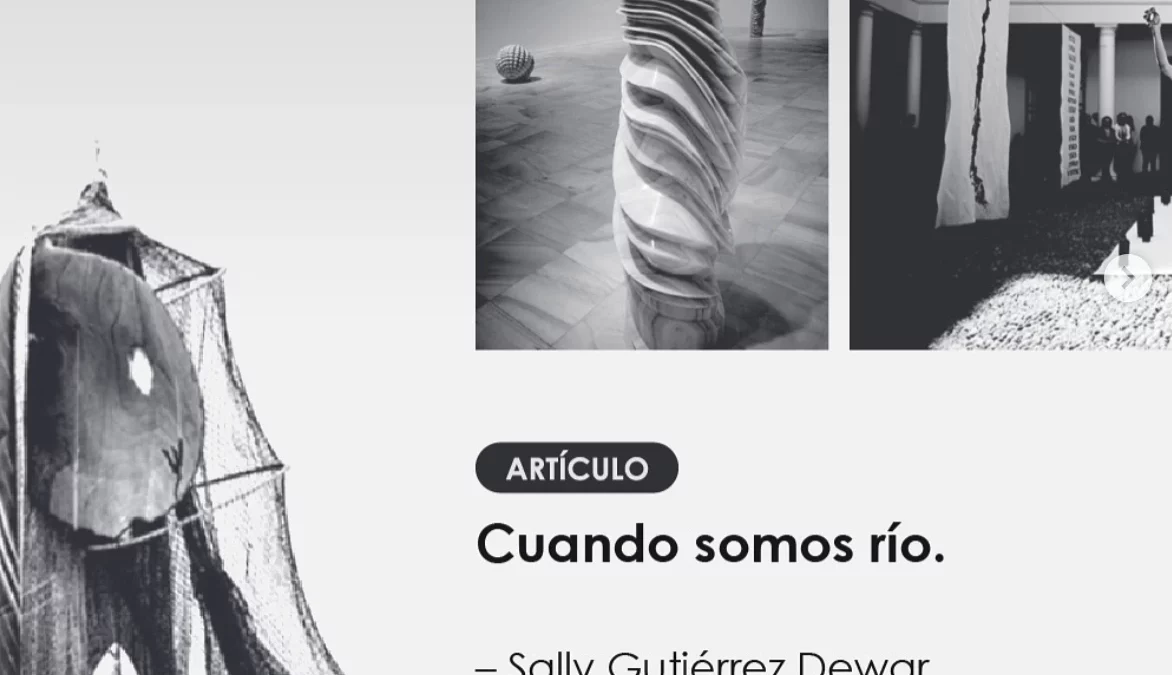
This article examines the work of seven contemporary female artists (Adriana Bustos, Carolina Caycedo, Seba Calfuqueo, Zoe Leonard, Eva Lootz, Emilija Škarnulytė and Cecilia Vicuña) for whom rivers and fluviality constitute a thematic axis, a poetic inspiration and a fundamental site of struggle. Reviewing and comparing their various theoretical, political and aesthetic approaches, the article explores how all of them represent, inhabit and traverse the river, addressing broader questions of environmental sustainability, cultural memory and struggles for social justice. The body of work presented here offers a material and symbolic re-territorialisation of the river that resituates us on the plane of being, in the temporal dimension of indigenous cultures and in the present of the political struggle for the right to water. The aesthetic and political perspective that emerges from this constellation of works and styles is here termed femifluviality. This concept refers to the interconnection of natural and cultural elements in the works analysed here, emphasising the feminist character of the articulation of geomorphologies, ontologies, biophysical and poetic energies, past and present identities, and cosmologies that make them distinctive.
Authors
How to cite
Sara (Sally) , G. D. (2025). Cuando somos río. Cuadernos Del Centro De Estudios De Diseño Y Comunicación, (256). https://doi.org/10.18682/cdc.vi256.12192