


Esther Pizarro Juanas
Principal investigator
Visual artist, researcher and professor at Universidad Europea de Madrid
Universidad Europea de Madrid
Journal article
Published
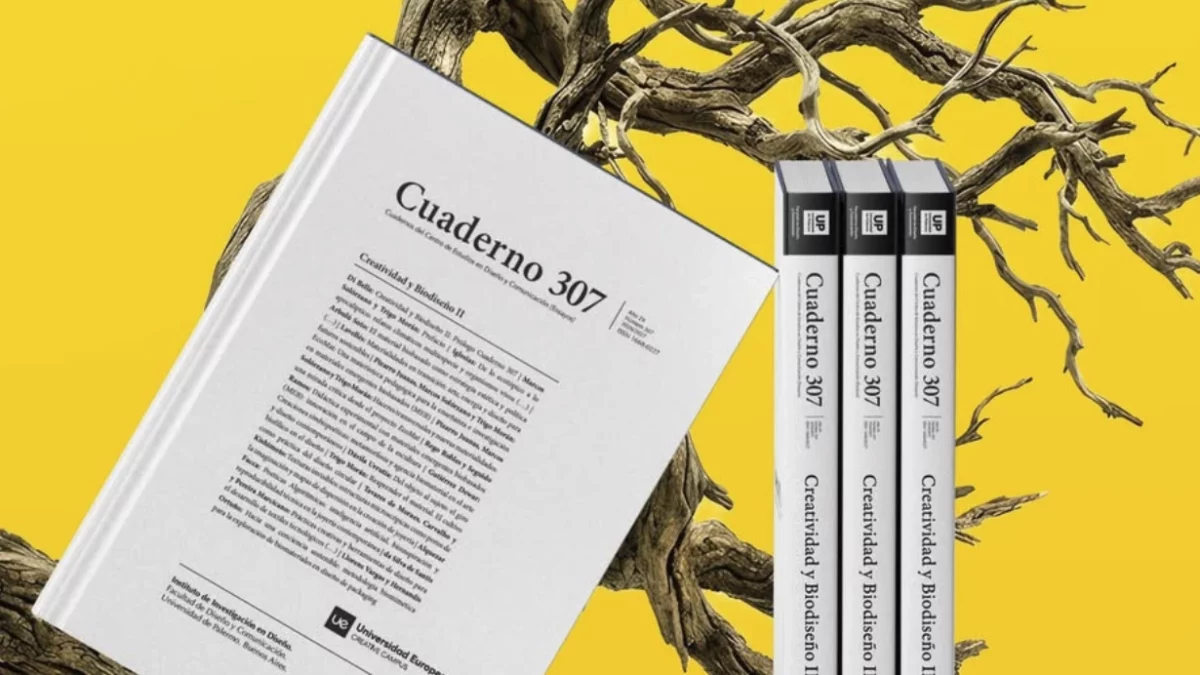
Haceres transversales y nuevas materialidades: una mirada crítica desde el proyecto EcoMat
Pizarro, E.; Marcos, I.; Trigo, M. · 2026
Publications
Abstract
This article raises the urgency of incorporating transversal modes of thought and practice in response to the complex environmental challenges of our time. The contemporary ecological crisis, by comprehensively affecting the social, cultural and material systems of life, demands the articulation of tools that not only connect different academic disciplines, but also foster dialogue between communities, generations, methodologies, practices and diverse epistemologies.
In this context, the EcoMat project, conceived as a pedagogical and sensory laboratory and developed through practice-based research, is presented as an example of how transversality is a fundamental factor in the development of emerging bio-based materials (MEB). This approach is not limited to material experimentation, but seeks to activate critical thinking around forms of knowledge production, sustainability regimes and the relationships between matter, technique and culture.
The 100 physical MEB samples developed in EcoMat constitute a living materials library, understood not only as an archive of materials, but as a relational device in which DIY methodologies, rigorous technical documentation, experimental and artistic approaches, theoretical research, critical thinking and popular knowledge converge. This convergence produces a space of hybridisation that questions the traditional hierarchies between the technical and the sensitive, between doing and thinking.
The transversality of the project is manifested both in the diversity of the agents involved — architects, sculptors, graphic and product designers, video artists — and in the heterogeneity of the communities it addresses: students, art and design professionals, academic researchers and the general public.
We argue that this transversal dimension, present in all phases of the project, constitutes not only a methodological strategy but also a fundamental political and epistemological stance for driving a profound transformation in the research and production of emerging bio-based materials, oriented towards more sustainable, sensitive and collaborative futures.
Authors

Isabel Marcos
Principal investigator
Visual artist, researcher and educator
Universidad Europea de Madrid
How to cite
Pizarro Juanas, E.; Marcos Solórzano, I.; Trigo Morán, M. (2026). “Haceres transversales y nuevas materialidades: una mirada crítica desde el proyecto EcoMat”. En Creatividad y Biodiseño II, Cuadernos del Centro de Estudios en Diseño y Comunicación, (307), 133-151.