


Esther Pizarro Juanas
Principal investigator
Visual artist, researcher and professor at Universidad Europea de Madrid
Universidad Europea de Madrid
Journal article
Published
Ecomat: una materioteca pedagógica para la enseñanza e investigación en materiales emergentes biobasados (MEB)
Pizarro, E.; Marcos, I.; Trigo, M. · 2026
Publications
Abstract
Emerging bio-based materials (MEB), developed from natural resources such as gelatines, agar-agar, starches or organic waste, constitute a biodegradable alternative to petroleum-derived synthetic materials and are positioned as key agents in the face of the current environmental crisis. However, their diversity, experimental nature and limited standardisation pose significant challenges in terms of sourcing, management, understanding and application in the fields of design, art and architecture. The information available on these materials is usually scattered and poorly systematised, which hinders their integration into educational and professional contexts and slows down the transition towards circular economy models.
In this context, material libraries — or materials libraries — emerge as strategic tools for gathering, cataloguing and disseminating material knowledge. By combining physical interaction with real samples and rigorous technical documentation, materials libraries facilitate a comprehensive understanding of biomaterials. Sensory properties such as texture, transparency, flexibility or smell are difficult to convey through digital media, which is why tactile experience acquires fundamental pedagogical value.
This article analyses the EcoMat materials library as a living archive and pedagogical device within academic design education. Developed within the framework of the research project Ecología material: biomaterialidades interespecie en el cruce de Ciencia, Arte y Tecnología (EcoMat), by the EcoBD Lab group at Universidad Europea de Madrid, EcoMat gathers and systematises a hundred samples of bio-based materials. Its cataloguing system integrates information on sensoriality, formulation and modes of use, with the aim of favouring replicability and scalability. Likewise, its modular physical container, conceived as a “Swiss Army knife” based on the versatility of the cube, allows the samples to be stored, archived, transported and displayed efficiently. In this way, EcoMat is configured as a tangible bridge between material research, pedagogical practice and circular transition.
Authors

Isabel Marcos
Principal investigator
Visual artist, researcher and educator
Universidad Europea de Madrid

How to cite
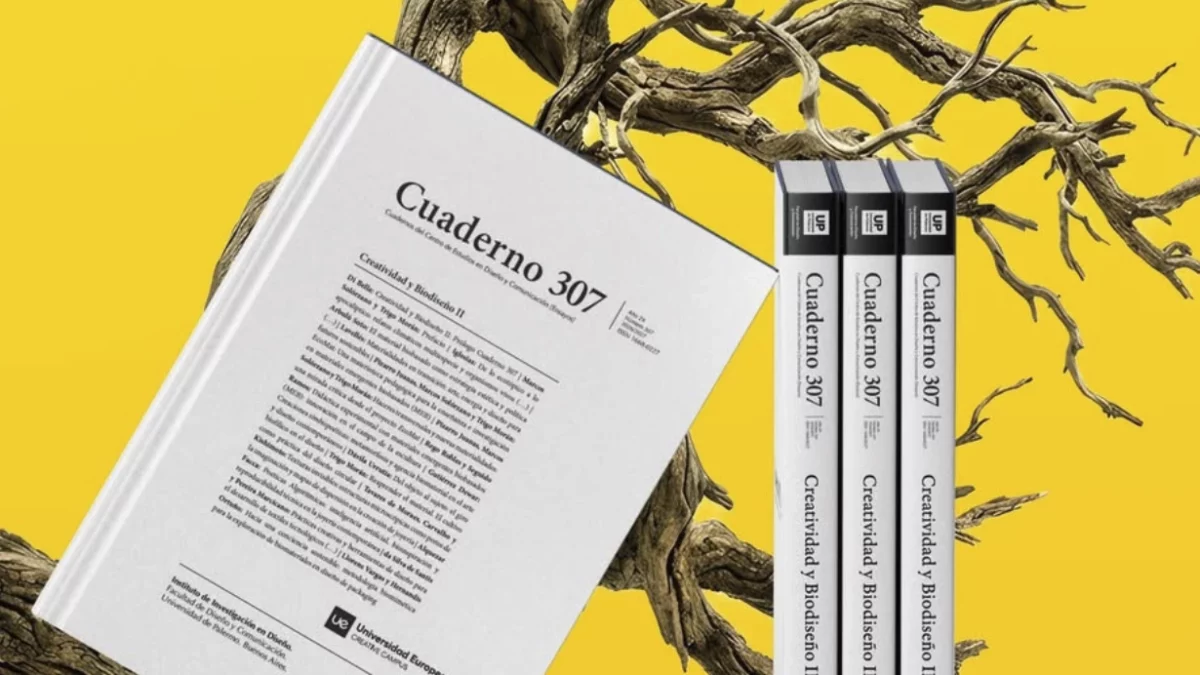
Pizarro Juanas, E.; Marcos Solórzano, I.; Trigo Morán, M. (2026). “EcoMat: una materioteca pedagógica para la enseñanza e investigación en materiales emergentes biobasados (MEB)”. Creatividad y Biodiseño II, Cuadernos del Centro de Estudios en Diseño y Comunicación, (307)